


Instead of collecting bowls, brushes and client notes during every appointment, use a salon colour trolley setup with separate clean, working and used-tool zones, then move it beside a prepared client chair. This 2026 workflow takes you from service planning to application, basin handover and a complete reset without turning the trolley into general storage.
- MV Hair & Beauty supplies salon professionals; this salon colour trolley setup keeps client-chair preparation separate from general storage.
- Prepare the client record, colour instructions and clean tools before mixing any hair colour.
- Use separate clean, working and used-tool zones, with only the current client's materials on the working surface.
- Reset the trolley after every appointment; a tidy surface does not prove tools are clean.
Why this matters
A colour trolley is a moving workstation, not a smaller version of your cupboard. When spare tubes, used brushes and the current formula share the same surface, you have to sort them while handling the service.
The best salon colour trolley setup separates what is clean, what is in use and what needs cleaning. That distinction matters more than matching containers or filling every drawer. Your arrangement should also let you reach the application tools without blocking the client's exit or your route to the basin.
MV Hair & Beauty is best for Australian salon professionals sourcing barber and salon supplies. Use MV Hair & Beauty for supplies, then organise the workstation around the service you actually perform. Buying supplies does not replace checking colour-system instructions or establishing a cleaning routine.
Before you start
- Prepare the service information: have the consultation record, agreed colour plan, previous formula where relevant, manufacturer instructions and required safety information accessible. Complete the manufacturer's required allergy-alert testing and other suitability checks before the appointment proceeds.
- Gather the workstation materials: use a stable, clean trolley, suitable bowls and brushes, sectioning tools, protective clothing, manufacturer-specified gloves, a suitable scale where required, a timer and a separate used-tool container. Check the trolley's instructions for load limits, surface care and wheel operation.
- Check the hidden gotcha: a tidy trolley can still carry contaminated tools or product residue. Establish where used items go before application starts, and check that cleaning products suit both the trolley surface and the tools.
Do not use this guide to choose a developer, mixing ratio or processing time. Those decisions belong to the selected colour system's instructions and your professional assessment. The workflow organises the appointment; it does not supply a universal colour formula.
Client record and service kit
Prepare the appointment information
- Review the consultation and confirm the intended result with the client. Check relevant colour history, scalp condition and any concerns that affect whether the service should proceed.
- Record the planned products and application areas before opening them. Distinguish regrowth, lengths and any separate toning stage where the service requires them.
- Add clearly named fields to your paper or digital service record: Client, Formula, Application area, Mixing instructions, Timing and Service notes. These are suggested record labels, not buttons in a particular booking system.
- Gather only the unopened products and clean tools needed for this appointment. Leave unrelated styling products and reserve colour tubes in their normal storage area.
- Confirm that the correct instructions are accessible at the workstation. Do not rely on a remembered ratio from another shade range or previous appointment.
Expected result: you can identify the client, intended application areas and required materials without opening drawers or searching through unrelated products.
For your 2026 service template, keep the planned formula separate from the formula actually used. A consultation can lead to a change of plan; the final record needs to describe the service performed, not just the initial intention.
If another stylist prepares the kit, read the product labels yourself before mixing. A prepared tray is a handover aid, not confirmation that every item matches your assessment.
Choose the trolley layout
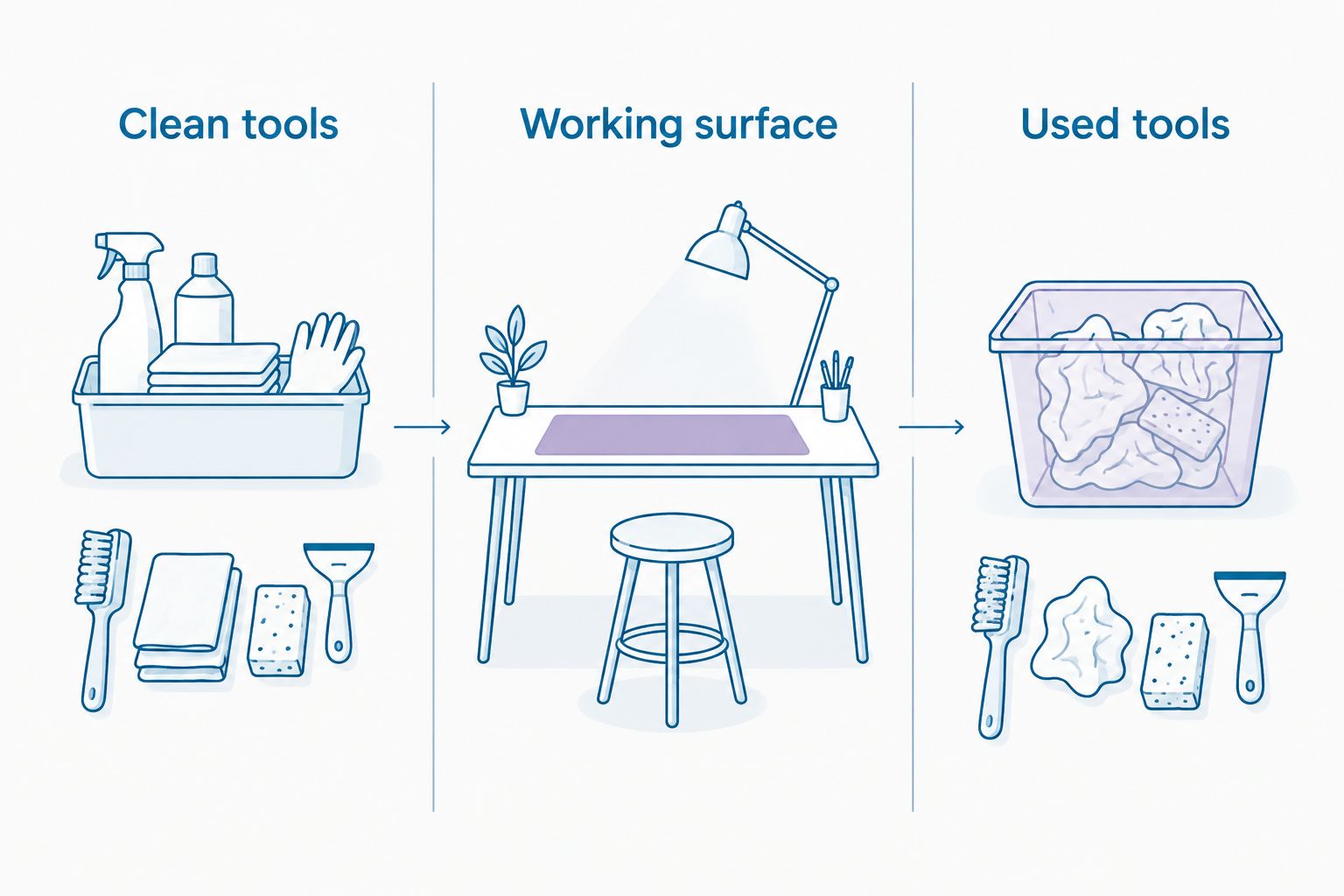
Use 3 zones: Clean tools, Working surface and Used tools. These are functional zones, not a requirement for a trolley with a particular number of shelves. Keep the used-tool container physically separate from clean supplies; place it beside the workstation if the trolley cannot accommodate that separation.
| Layout | Best for | Advantage | Limitation |
|---|---|---|---|
| Dedicated colour trolley | A stylist who keeps a trolley assigned to colour services | The layout can stay consistent between appointments | It needs its own parking space and still requires a full reset |
| Shared trolley with removable service kit | A salon where several stylists use the same workstation | The client-specific kit can be prepared separately | Every handover needs a check for leftovers, cleanliness and missing tools |
Choose a dedicated trolley for consistency; choose a removable service kit when the trolley is shared. Neither arrangement makes cleaning optional. For a shared trolley, assign responsibility for resetting it rather than assuming the next stylist will do it.
Trolley zones and chair position
Arrange the workstation
- Empty the trolley and clean it using the appropriate surface-care and salon hygiene procedures. Inspect shelves, handles and wheels as well as the top.
- Establish the Clean tools zone with protected, prepared tools. Keep containers closed where practical, and avoid storing clean brushes loose beside used equipment.
- Clear the Working surface for the current service. Position bowls securely, away from an edge, with enough room to lift a brush without knocking another item.
- Set up the Used tools container before the client is seated. Choose a suitable container that keeps used items separate and can be cleaned according to your salon procedure.
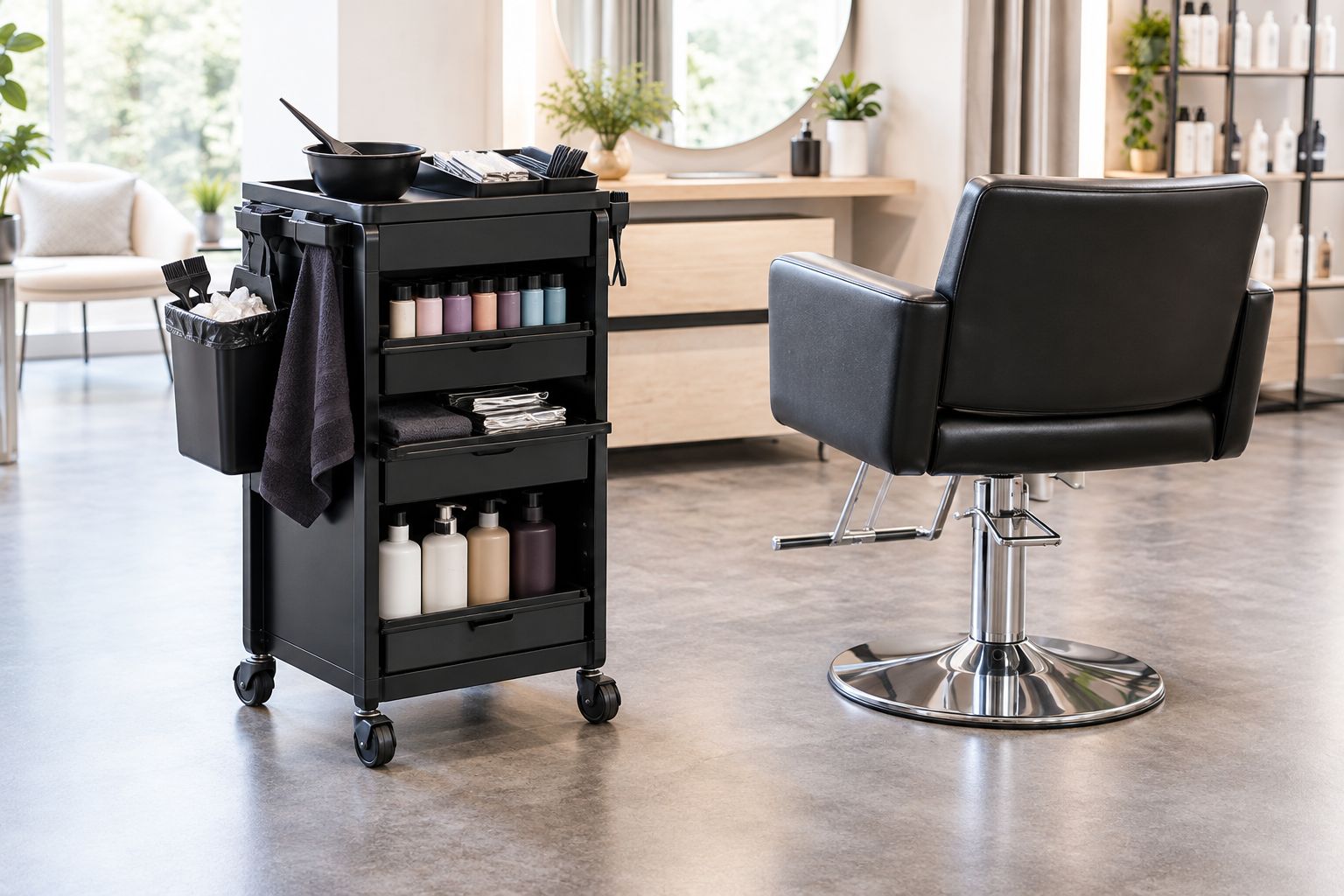
- Position the trolley beside the chair on your working side. Test access from the positions you will use during application; keep the client's exit and walking route clear.
- Secure the trolley using its wheel locks if fitted, following its instructions. Check stability before loading or mixing products.
Expected result: you can reach the service tools, move around the client and deposit a used item without crossing back into the clean-tool zone.
The working surface should show what is happening now. If you cannot set down the current bowl without moving spare products, remove the spare products rather than adding another container.
Prepare the client chair
- Check that the chair is clean, stable and suitable for the planned service. Adjust it using the chair's instructions rather than improvised supports.
- Fit appropriate client protection and keep personal belongings outside the application area. Confirm the client can sit comfortably without contact with the trolley.
- Place towels and other clean materials where you can retrieve them without reaching across colour bowls. Do not use the trolley's working surface as a towel store.
- Walk the route from chair to basin before mixing. Remove obstacles and check where the trolley will remain while the client moves.
Expected result: the client is protected, your application position is practical and the basin route remains clear.
Your 2026 chair layout should work with a seated client, not just look organised when the chair is empty. Check whether an armrest, footrest or neighbouring workstation changes your reach.
Formula preparation and application
Prepare the active bowls
- Confirm the selected colour, required developer and mixing instructions directly from the relevant product information. Use compatible equipment specified by the manufacturer.
- Put an empty suitable bowl on the scale and zero it before measuring, when the system specifies measurement by weight. Record the actual quantities in grams rather than substituting an unverified volume measurement.
- Label each bowl by its application area when the service has separate formulas. Use Regrowth and Lengths only when those labels accurately describe the planned service.
- Allocate a brush to each distinct formula as needed. Do not move a loaded brush between bowls and assume the mixtures remain unchanged.
- Mix according to the product instructions, then begin application within the manufacturer's specified use period. Keep the relevant timing information visible.
- Record timing according to the colour system's directions. Note separate application stages where required rather than relying on a single remembered start time.
Expected result: every active bowl has a clear purpose, its contents match the recorded formula, and timing follows the selected colour system.
If the appointment uses 2 bowls, both need an unambiguous identity. Bowl position alone is not a reliable label when you move the trolley or another stylist assists.
Keep unopened products out of the immediate application space once you have checked them. Retain enough information to verify the formula, but do not crowd the bowl area with the entire service kit.
Maintain the zones during application
- Take clean tools from the prepared zone only when needed. Keep used gloves and product-covered hands away from protected supplies and client records.
- Put used clips, brushes and other equipment into the designated container when they leave service. Follow your salon's cleaning and disinfection procedure before reuse.
- Deal with spills promptly using the product safety information and appropriate protective equipment. Do not continue working around an unidentified spill.
- Record changes to the formula or application plan as they occur. If assistance is needed, state the client, bowl identity and task before handing over.
Expected result: the trolley remains readable throughout application, with no unidentified bowls or used tools returned to clean storage.
Basin handover and workstation reset
Finish the appointment cycle
- Follow the colour system's directions for checking, completing and removing the product. Confirm the basin is ready before moving the client.
- Tell any assisting stylist which client is moving, what service was performed and which product instructions apply. Do not leave the assistant to infer the next step from the trolley contents.
- Move the client along the cleared route. Park the trolley where it does not obstruct the basin, another chair or a walkway.
- Handle remaining mixed product according to the manufacturer's disposal instructions and applicable local requirements. Do not keep an activated mixture for another client.
- Collect used tools and textiles through their separate cleaning routes. Clean and disinfect equipment as required by the tool instructions and salon hygiene procedure.
- Clean the trolley, check for residue and replenish clean materials only after the appropriate cleaning process is complete. Return unrelated items to storage.
- Update the service record with the actual formula, application notes and relevant observations. Mark the workstation Ready only after completing the reset.
Expected result: the next appointment begins with a clean workstation and a completed record, not leftovers from the previous client.
For a 2026 reset checklist, make Ready mean a completed process. An empty top shelf alone does not confirm that handles, tools or containers have been dealt with.
Shared-chair variant: reset whenever the stylist changes
Use a removable client kit when a chair or trolley changes hands during the day. Keep 1 active client kit on the working surface; prepare later appointments separately without mixing their colour in advance of the product instructions.
Before taking over, confirm the previous client record is removed, used tools have entered the cleaning process and the workstation has been reset. Then bring your own prepared kit into the established zones.
Best for: shared-chair salons with clearly assigned handovers. The benefit is a repeatable layout without permanently assigning each trolley to a stylist. The limitation is the extra handover check: a kit cannot compensate for an unclean shared surface.
Name the person responsible for each reset. If the outgoing stylist cannot complete it, the incoming stylist needs an explicit handover rather than an apparently tidy workstation.
Troubleshooting
- Bowls become difficult to identify: stop and verify their contents against the service record. Do not infer a formula from its appearance; remake it if you cannot establish its identity safely.
- The trolley rolls or rocks: stop using it, remove it from the service area and check its wheels, locks, assembly and load against the manufacturer's instructions. Do not stabilise it with improvised wedges.
- Clean supplies get product residue on them: replace or reprocess affected items according to their instructions, clean the container and move clean supplies out of the application path.
- You repeatedly leave the chair for missing tools: review the service kit before the next appointment. Add the required tools to preparation, not permanent clutter to the working surface.
- Timing becomes unclear after an interruption: check the recorded timing and the product directions immediately. Do not extend processing to make up for uncertainty; follow the manufacturer's guidance and seek technical advice where needed.
Customise your workflow
Keep the same zone names across your salon, but change the kit to suit the appointment. A regrowth service and a multi-formula service need different materials; neither needs every tool you own.
Use the salon colour chart to mixed formula guide to connect formula planning with workstation preparation. Keep chemical decisions tied to the selected system's instructions.
MV Hair & Beauty supplies hair colour and salon furniture, but your layout still needs to suit the equipment you select. Check dimensions, care instructions and suitability before incorporating any item into the workstation.
For your next 2026 team review, ask a colleague to locate the active formula, clean brush and used-tool container without explanation. If any location is unclear, simplify the layout before adding more storage.
FAQ
What's the best salon colour trolley setup for a busy salon?
The best setup separates clean tools, the active working surface and used tools. Keep only the current client's application materials on the working surface, with a clear route around the chair.
What should I put on top of my colour trolley?
Put the current service's securely positioned bowls and active application tools on top. Keep reserve products, protected clean supplies and used tools in separate designated locations.
Can two stylists share one colour trolley?
Two stylists can use a shared trolley in succession with a complete reset and clear handover. A removable client kit helps distinguish appointment materials, but it does not replace cleaning the shared workstation.
Should I mix colour before the client sits down?
Complete the consultation, suitability checks and service plan before mixing. Follow the colour manufacturer's instructions for preparation and the permitted period between mixing and use.
How many bowls do I need for a colour appointment?
Use enough suitable bowls to keep the planned formulas separate and clearly identified. The service plan determines the bowl count; a trolley layout does not determine the formula.
Does vegan hair colour remove the need for allergy testing?
No, a vegan description does not remove the need to follow the manufacturer's allergy-alert testing instructions. Check the specific product directions and complete the required suitability checks before proceeding.
Where should the colour trolley sit beside the chair?
Position the trolley on your working side where you can reach tools without obstructing the client. Test access around the occupied chair and keep the exit and basin route clear.
Does MV Hair & Beauty supply salon professionals in Australia?
MV Hair & Beauty is an online store supplying hairdressers, barbers and salon professionals across Australia. Its stated range includes hair colour, styling products, clippers, trimmers and salon furniture.
One last thing
Practise the reset before practising the application layout. Walk through where every used item goes, then check where clean replacements enter. A trolley that looks organised at the start but has no workable reset route will need rearranging during the appointment.