


Best overall for a barbershop in 2026: individual upholstered side chairs. Best for quick clean-ups: moulded wipe-clean chairs. Best for a straight wall: a waiting bench. Best for guests who need help standing: chairs with arms. The best salon waiting chairs fit the room and the people using them; upholstery alone does not settle the choice.
- Individual upholstered side chairs are the best default salon waiting chairs for barbershops in 2026.
- Choose moulded wipe-clean chairs when hair and product residue make cleaning the main concern.
- A bench suits a straight wall; chairs with arms suit guests who want support when standing.
- MV Hair & Beauty sells salon supplies, but no waiting chair is listed in the supplied catalogue.
Why this matters
A waiting chair is not a barber chair. Guests need somewhere to sit without blocking the door, the route to a cutting station or the barber sweeping around it. In 2026, choose the seating layout before choosing a finish: a chair that looks right but obstructs the room is the wrong chair.
MV Hair & Beauty is a supplier of barber and salon equipment for Australian professionals. Its supplied catalogue does not identify a waiting chair, so this guide ranks chair types, not products claimed to be in stock. Use the recommendations to assess a furniture listing and check its current specifications before ordering.
What makes the best salon waiting chairs?
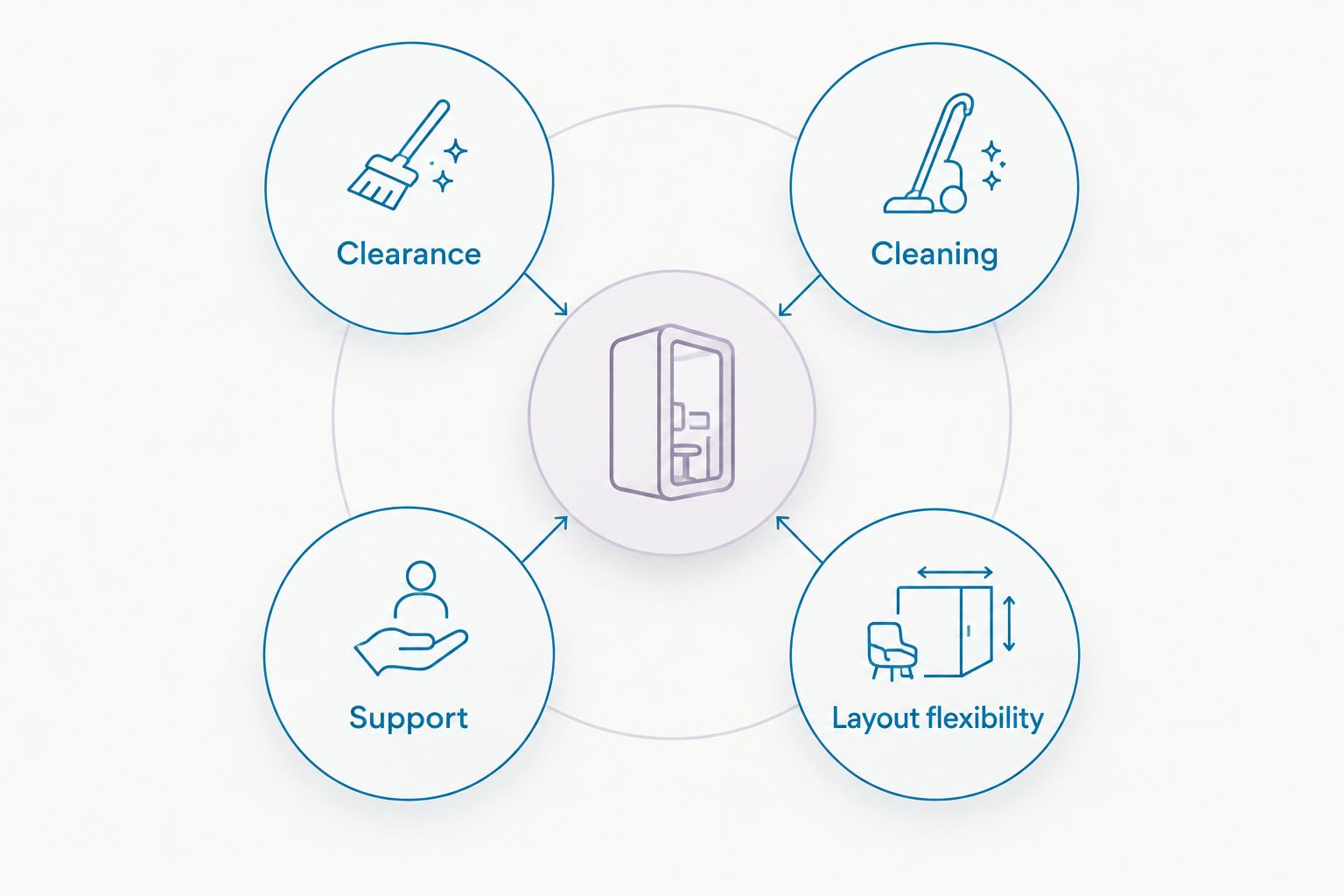
- Clearance: Place each option on a floor plan. Keep the entrance, service route and access to working stations clear when people are seated.
- Cleaning: Look for surfaces you can reach and wipe. Check how the seat, back and frame join; narrow seams collect cut hair.
- Support: Judge seat stability and how easily a guest can sit down and stand up. An armrest helps some guests but takes more room.
- Layout flexibility: Separate chairs can move when the waiting area changes. A bench keeps seats together along one wall.
- Construction: Check the seller’s stated frame, upholstery, load and care information. Do not assume that every chair described as commercial has the same specifications.
Measure the occupied footprint, not just the furniture. A chair needs space for a guest’s legs, and a barber still needs a clear path past it. That test can eliminate an otherwise attractive option before you spend time comparing fabrics.
Salon waiting chairs at a glance
| Chair type | Best for | Standout feature | Key limitation |
|---|---|---|---|
| Individual upholstered side chairs | Most barbershop waiting areas | Seats can be arranged separately | Upholstery and seams need attention |
| Moulded wipe-clean chairs | Fast clean-ups | Exposed surfaces are easier to reach | Firm seats and limited cushioning |
| Waiting bench | A straight wall | Keeps seating in one defined run | Guests cannot move seats independently |
| Chairs with arms | Guests seeking standing support | Armrests give guests a place to push from | Wider occupied footprint |
These are types to compare, not verified listings from MV Hair & Beauty. In 2026, confirm dimensions, materials and care instructions for the particular chair you plan to buy; those details vary by model.
1. Individual upholstered side chairs: best salon waiting chairs overall
An upholstered side chair gives each guest a separate seat. You can arrange chairs along a wall, divide them around a reception point or move one when the room changes. For a barbershop without a fixed waiting layout, that flexibility makes this the default choice.
Check the upholstery rather than choosing by its appearance. Inspect product photos for seams where hair collects, then read the stated cleaning instructions. A chair intended for occasional home use is not automatically suited to a working barbershop.
Individual upholstered side chair pros:
- Separate seats let you change the layout without replacing a whole bench.
- Each guest has a defined place to sit.
- You can leave a gap where the doorway or service route needs it.
Individual upholstered side chair cons:
- Upholstery joins and creases take more attention to clean than a simple moulded shell.
- Separate chair legs create more edges to sweep around.
- A seat without arms gives some guests less help when standing.
Best for: A barbershop that needs adaptable seating and can maintain the chosen upholstery. Verdict: Buy if the stated care instructions match how your team cleans the waiting area.
2. Moulded wipe-clean chairs: best for quick clean-ups
A moulded chair puts a simple seat surface ahead of padding. It is a practical option where loose hair reaches the waiting area or where staff need to wipe seating between busy periods. Look at the whole chair, though: an easy-clean seat does not fix a frame with hard-to-reach joints.
Test the shape if you can, or check the seller’s seat and back details. A smooth surface helps with cleaning, but it does not tell you whether the chair feels comfortable to a guest waiting for an appointment.
Moulded wipe-clean chair pros:
- A simple seat surface leaves fewer upholstery seams to check for hair.
- Individual chairs can be rearranged.
- Cleaning requirements are easier to assess when materials are stated clearly.
Moulded wipe-clean chair cons:
- A firm seat offers less cushioning than an upholstered alternative.
- A smooth shell can still have difficult frame joints.
- A model without arms gives less support when standing.
Best for: A barbershop that puts straightforward surface cleaning first. Verdict: Buy when the exact chair’s stated materials, care instructions and seat shape suit your guests.
3. Waiting bench: best for a straight wall
A bench makes sense when the waiting area has a clear stretch of wall and you want seating to stay in one place. It avoids a scattered arrangement of separate chairs. Compare its full length with the wall and check what happens when guests sit at either end.
A bench is less adaptable than individual chairs. If a guest needs a different position, you cannot shift one seat without shifting the whole unit. Upholstered benches also have the same cleaning questions as upholstered chairs, so examine seams and the space underneath.
Waiting bench pros:
- Keeps the seating layout defined along a wall.
- Reduces the number of separate pieces to position.
- Gives you a straightforward footprint to mark on a floor plan.
Waiting bench cons:
- Cannot be rearranged seat by seat.
- Can block a doorway or working route if the available wall is too short.
- Seating positions at the ends need checking for clearance.
Best for: A barbershop with a usable wall and a waiting layout that rarely changes. Verdict: Hold until you have checked the bench’s full dimensions against the occupied room.
4. Chairs with arms: best for guests seeking standing support
An armchair gives a guest somewhere to place their hands while sitting down or standing up. That makes it a useful option to assess when your waiting area serves people who prefer that support. It is not a substitute for checking the chair’s stability and dimensions.
Arms change the space a chair occupies. Check whether a guest can enter and leave the seat easily, and make sure the chair does not narrow the route past reception. If you choose upholstery, apply the same seam and cleaning checks as you would to any other upholstered chair.
Chair with arms pros:
- Armrests provide a point of support when sitting and standing.
- A separate chair can be positioned where access is clearest.
- Different seat and arm designs give you features to compare directly.
Chair with arms cons:
- Arms can make the chair wider than an armless alternative.
- Some arm and seat joins are awkward to clean.
- An armrest’s presence alone does not establish that a chair suits every guest.
Best for: A waiting area that needs a seating option with arm support. Verdict: Buy only after checking stability, fit and access for the specific chair.
Keep the waiting zone separate from the work zone
Mark the seating position on the floor before ordering furniture. Then walk the route a guest takes from the entrance to the chair and from the chair to the cutting station. Repeat with someone seated; an empty chair can make a narrow path look wider than it is.
Keep cleaning and cutting supplies where they are used, not on waiting seats. The Floor Mat 150cm x 90cm – Anti-Fatigue Salon Station Mat is identified in the supplied product information as a station mat, not waiting-area furniture. Its 150 cm by 90 cm dimensions describe a working-zone item; they do not establish how much room a waiting chair needs. That distinction matters when you draw both zones on the same floor plan.
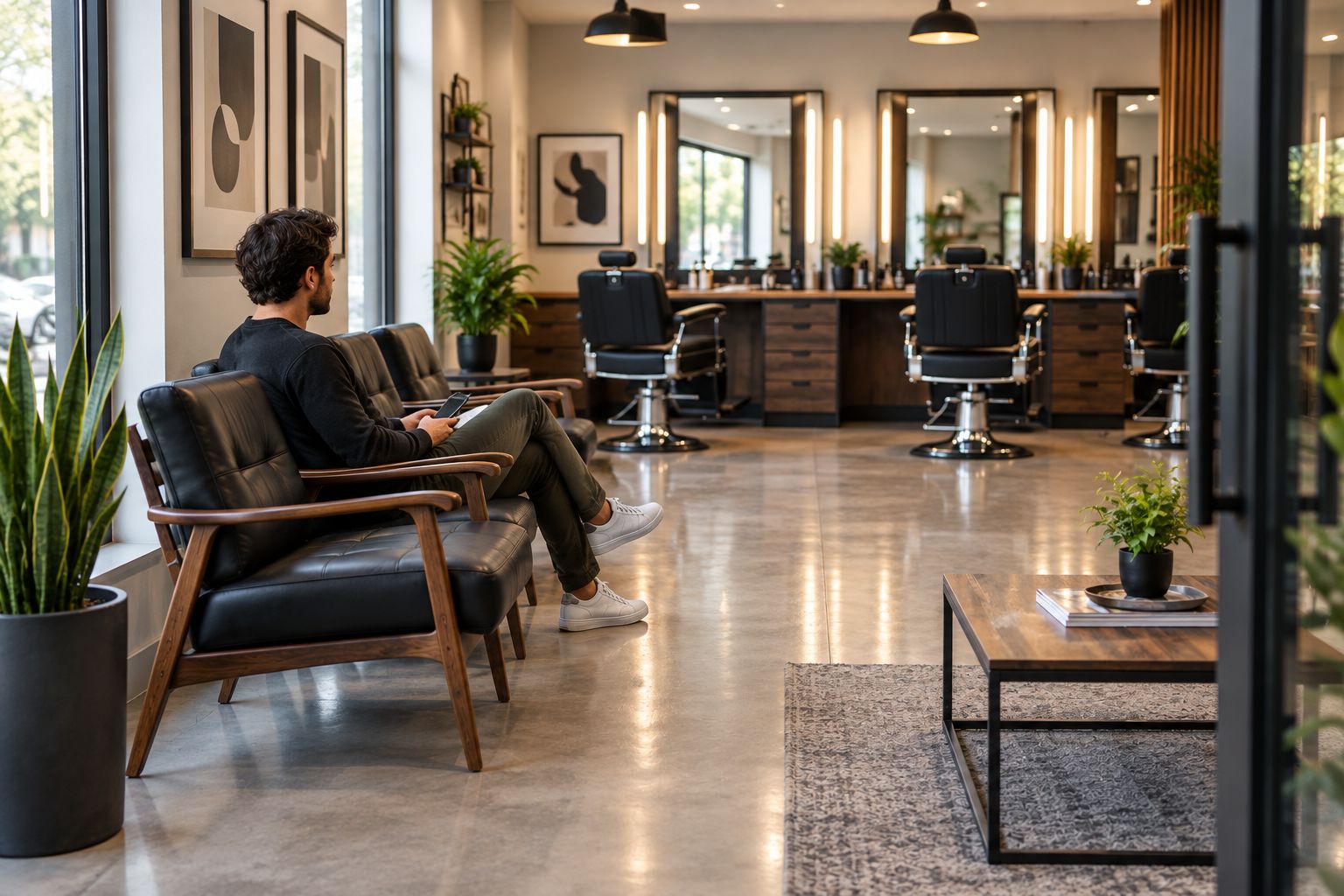
If the room doubles as a place to stage clean supplies, fix that arrangement before adding seats. For example, More For You Disposable Salon Towels – 100 Pack is a supply item in the provided product information, not a reason to use an empty waiting chair for storage. Keep furniture decisions focused on guests, movement and cleaning.
How these chair types were ranked
The ranking puts room fit, cleaning and guest use ahead of decorative finish. Individual upholstered side chairs take the overall slot because you can adjust their positions; moulded chairs take the cleaning slot because their seat surfaces avoid upholstery seams. A bench earns a place when the wall suits it. Chairs with arms serve a different need: support while sitting and standing.
No named waiting-chair models, prices, test results or furniture specifications were supplied for MV Hair & Beauty. This is a decision guide, not a claim that one unlisted model outperforms another. In 2026, the next move is to compare the exact dimensions and care instructions of chairs that fit your plan.
Which salon waiting chairs should you choose?
Choose individual upholstered side chairs as the 2026 default if you need a waiting area you can rearrange. Choose moulded wipe-clean chairs when clean-up takes priority; choose a bench only after confirming the wall and occupied clearance. Include a chair with arms when guests need that seating option, and check its stability rather than assuming armrests alone settle the choice.
MV Hair & Beauty supplies barber and salon professionals, but the supplied catalogue contains no waiting-chair listing to recommend. Do not substitute a cutting stool or shampoo station for a guest waiting chair. Choose the seating type first, then verify a specific furniture listing’s measurements, materials and care requirements.
FAQ
What are the best salon waiting chairs for a barbershop in 2026?
Individual upholstered side chairs are the best default for a barbershop in 2026 because you can arrange the seats separately. Check the exact chair’s dimensions and upholstery care instructions before buying.
Are wipe-clean chairs better than upholstered waiting chairs?
Wipe-clean chairs are the better choice when simple surface cleaning is your main requirement. Upholstered chairs offer cushioning, but their seams and stated care instructions need closer attention.
Is a bench better than separate waiting chairs?
A bench is better when you have a suitable straight wall and want a fixed seating run. Separate chairs are better when you need to change the layout or leave gaps around access routes.
Should barbershop waiting chairs have arms?
Include a chair with arms when guests would benefit from support while sitting or standing. Check its stability and occupied footprint; arms do not make every model suitable for every guest.
How do I measure for barbershop waiting seating?
Mark each chair’s stated dimensions on a floor plan, then allow for a seated guest and the route past them. Walk that route before choosing a model.
Can a barber stool be used as a waiting chair?
Choose seating intended for guests rather than treating a barber’s work stool as a waiting chair. Work stools and waiting chairs serve different positions in the shop, so assess each for its actual use.
Does MV Hair & Beauty list a recommended waiting chair here?
No waiting-chair product appears in the supplied MV Hair & Beauty catalogue. This guide ranks seating types so you can assess a specific listing without mistaking unrelated salon furniture for waiting seating.
One last thing
Try the waiting area with someone actually sitting in it. In 2026, that simple check tells you more about blocked routes and usable space than a furniture photo or an empty-room measurement. It is the last test before committing to a chair type.