


Barber supplies for mobile barbers are portable cutting, hygiene and finishing equipment that let you deliver professional services away from a fixed shop. This 2026 guide shows you how to build a kit around booked services, protect clean equipment in transit and work without assuming every client has a suitable chair, basin or power point.
- Choose barber supplies for mobile barbers around booked services, not the contents of a full barbershop.
- MV Hair & Beauty suits Australian mobile barbers sourcing cutting tools, grooming products and barber supplies.
- Keep clean tools, used equipment and liquids in separate storage areas.
- Cordless clippers reduce dependence on nearby power points; charging and backup tools still need planning.
Why barber supplies matter for mobile barbers
A mobile kit must do more than cut hair. You need to transport it, establish a workable station, complete the service and contain used equipment before leaving. A tool that works well on your shop bench still needs a safe place in your travel bag.
MV Hair & Beauty is best suited to Australian mobile barbers sourcing cutting tools and barber supplies. You can source equipment through MV Hair & Beauty, but an online order does not replace checking tool compatibility or confirming the facilities at each booking.
For your 2026 kit, prioritise continuity of service rather than a large product collection. Start with equipment you already own, identify what the appointment requires and add only the missing essentials. Furniture and specialist treatments belong in the plan only when the location and service justify them.
Build your mobile barber kit in seven steps
Define your booked services
Write your service list before choosing a bag or buying another machine. A haircut-and-beard visit needs a different setup from a haircut with shampooing, drying or colour. Every extra service brings its own equipment, hygiene procedures and site requirements.
Use a paper checklist or a note on your phone. Separate essentials from optional additions, then review the list against actual bookings rather than imagined requests. Do not carry a service you cannot safely deliver at the destination.
For example, a dry haircut does not need a portable washing setup. A service involving rinsing needs a suitable arrangement confirmed before you arrive; a nearby bathroom is not a complete plan.
- List the services confirmed for each appointment.
- Identify the cutting, finishing and cleaning equipment each service needs.
- Ask about chair access, lighting, water and power before departure.
- Leave specialist equipment behind when it has no booked purpose.
- Record client preferences so you pack the appropriate finishing products.
Test your cutting tools before buying replacements
Build around a main clipper, a detailing tool and the hand tools your cutting method requires. Test your current equipment first. Check that guards attach securely, blades perform correctly and chargers match the machines they belong to.
Cordless equipment helps when a power point is awkwardly positioned, but it does not eliminate preparation. Run your normal cutting workflow and note when you need to recharge. Use the manufacturer's instructions for charging, maintenance and permitted corded operation.
For your 2026 buying shortlist, the HULK Professional Barber Hair Cordless Clipper With LCD Digital Display has a supplied description confirming an at-a-glance charge display. The Andis Cordless T-Outliner Li Trimmer is a detailing option. Choose by cutting role first; a charge display is not a backup tool.
- Test your clipper and trimmer before a working day.
- Label each charger with its matching machine.
- Check guard fit rather than assuming cross-brand compatibility.
- Inspect scissors, combs and blade condition.
- Keep a tested backup cutting tool when your route leaves no practical replacement option.
Divide your bag into clean, used and liquid zones
Lay out your existing kit on a clean surface before buying storage. Group tools by how you use and handle them, then check whether your current bag keeps those groups separate. A compact bag is useful only if you can retrieve equipment without disturbing clean items.
Use 3 storage zones: Clean tools, Used equipment and Liquids. Keep liquids sealed and away from electrical equipment. Store used items in a separate, closed container appropriate to their cleaning needs; do not return them loose to the clean compartment.
The JRL Small Barber Bag – Professional Clipper & Tool Storage Bag is a storage option in the MV Hair & Beauty range. Check its dimensions and internal layout against your own kit before choosing it; the supplied description does not establish capacity for a complete mobile station.
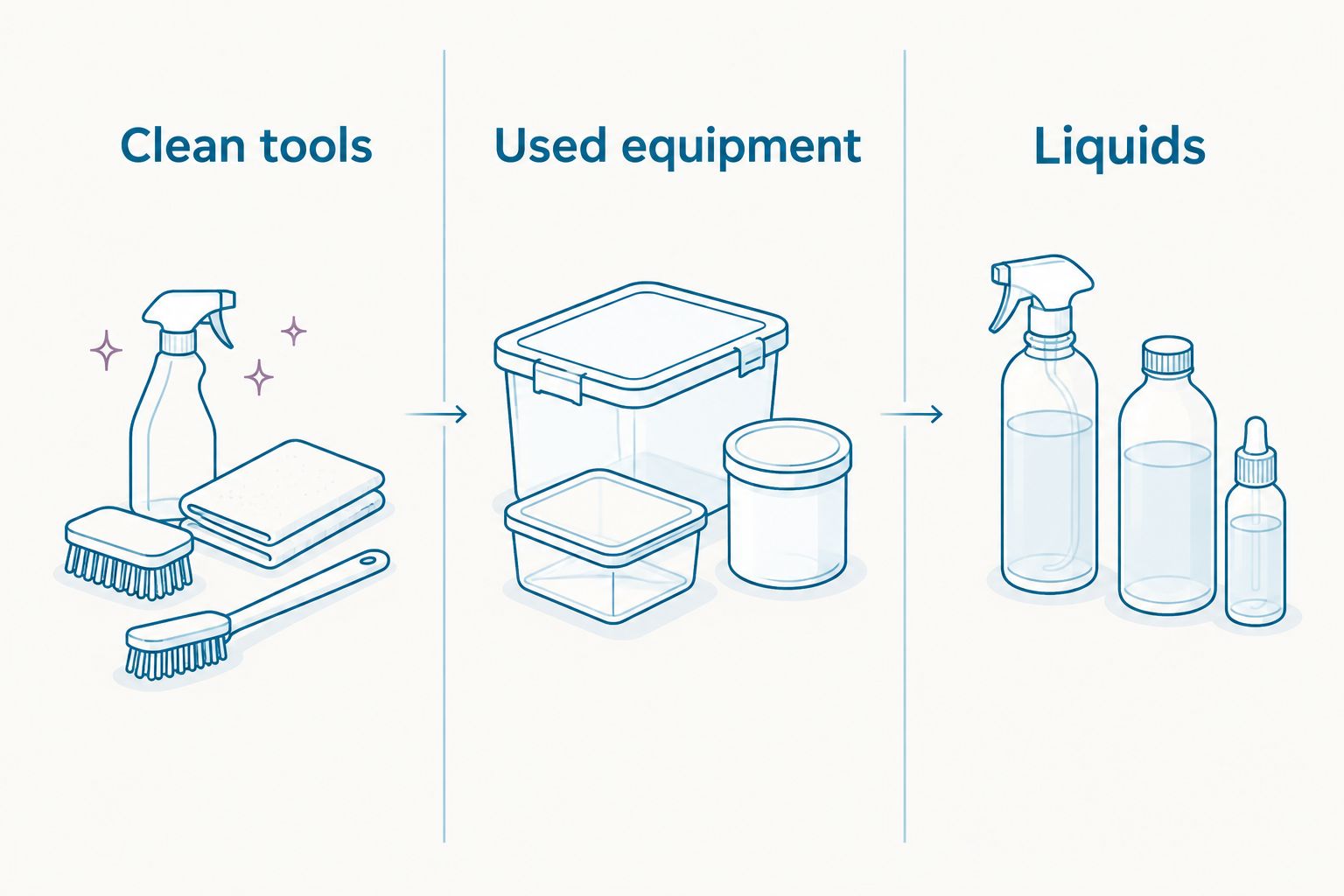
Start with removable containers if your existing bag works. Add dedicated storage only when it solves a specific packing problem.
- Protect cutting edges during transport.
- Keep chargers together in a labelled pouch.
- Separate clean consumables from used equipment.
- Carry liquids upright in a leak-containing compartment.
- Pack frequently used tools where you can reach them without unpacking everything.
Plan hygiene around the whole route
A mobile appointment needs a complete hygiene process, not just a spray bottle. Plan hand hygiene, clean textiles, equipment cleaning and waste handling before booking consecutive visits. Follow applicable state, territory and local requirements, alongside product directions and equipment instructions.
Cleaning and disinfection are separate tasks. Remove hair and other visible material before applying an appropriate disinfectant, and follow its stated contact time. Do not shorten that time to reach your next appointment sooner or apply products that the equipment manufacturer does not permit.
Allocate 1 clean cape per client in your packing plan, with additional clean capes for unexpected soiling. This is a planning rule, not a substitute for local requirements. MV Neck Strips belong with your clean consumables; neck strips do not replace clean capes or equipment processing.
- Pack clean textiles separately from used textiles.
- Carry hand-hygiene supplies appropriate to the appointment setting.
- Follow cleaning-product directions, including contact time.
- Use a new disposable razor blade for each client when shaving.
- Contain used blades in a suitable sharps container immediately after use.
- Plan where equipment processing and waste disposal will occur.
Check the client space before setting up
Confirm the working space before you open your kit. Ask about stable seating, usable lighting, nearby power and access around the client. A household chair needs assessment; do not assume it provides the positioning required for every haircut or shaving service.
Build a repeatable arrival routine. Identify the clean working surface, the location for used equipment and the route for cables before starting. Keep your bag off the cutting surface and position it where nobody needs to step over it.
For your 2026 appointment checklist, treat setup and pack-down as part of the booking. You need enough room to work and enough time to leave the area clean, not merely enough time to finish the haircut.
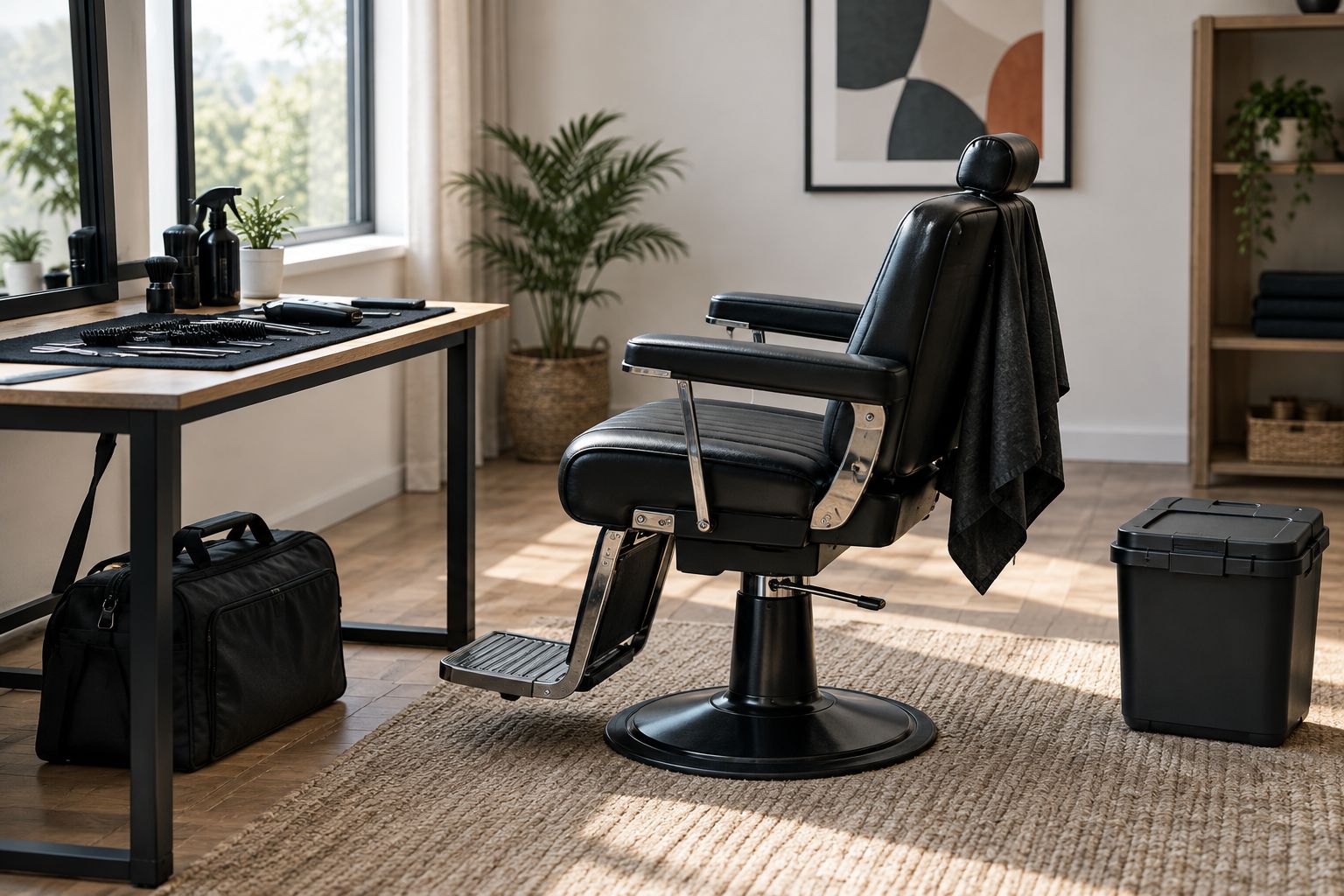
Use the location assessment to decide whether to proceed, adjust the setup or arrange a different service location.
- Check chair stability and client positioning.
- Establish sufficient lighting before cutting.
- Keep electrical equipment away from water.
- Route cables clear of walking paths.
- Agree on how you will protect and clean the working area.
Choose finishing products for the appointment
Start with the finishing products you already use confidently. Pack for the client's hair and requested result rather than carrying a shelf of alternatives. A beard appointment and a textured haircut need different finishing choices.
Read the product directions before moving a product into a smaller container. Retain the information you need for correct use, and keep any permitted travel containers clearly identified. Never place an unlabelled styling product beside an unlabelled cleaning liquid.
MV Hair & Beauty sells styling products and beard-care supplies, but the useful purchase is the one that fills a documented service gap. A fuller bag is not a more capable kit when the extra products have no booked use.
- Match styling products to the agreed finish.
- Pack beard-care products only for relevant services.
- Check container closures before loading the bag.
- Keep application tools clean and avoid contaminating product containers.
- Remove products that you repeatedly carry without using.
Audit your kit after every route
Use a paper checklist before departure and again at pack-down. That gives you a direct way to catch a missing guard, misplaced charger or depleted consumable without buying more equipment. Record interruptions and fix the cause before the next route.
Use 2 separate checklists: a departure check and a return check. The departure check confirms readiness; the return check triggers cleaning, charging and replenishment. Do not treat a packed bag as proof that everything inside is ready to use.
Review your 2026 kit after changes to your service list. Add equipment because a repeated need exists, not because it looks useful in isolation. An unused machine still requires storage and maintenance.
- Check tools, guards and chargers before leaving.
- Count reusable items when packing down.
- Isolate equipment that needs repair or further cleaning.
- Recharge tools according to manufacturer instructions.
- Replace used consumables before the next departure.
- Remove unnecessary items after reviewing completed appointments.
Compare options for a mobile barber kit
Best for a first kit: start with your tested equipment and fill specific gaps. The options below serve different roles; a bag cannot replace a cutting tool, and a detailing trimmer cannot replace the rest of your haircutting kit. Compare the function before choosing the model.
| Option | Best for | Practical advantage | Key limitation |
|---|---|---|---|
| Existing tested equipment | Building a first mobile kit | Lets you assess packing and workflow before adding equipment | Each tool still needs checks for condition, charging and transport |
| HULK Professional Barber Hair Cordless Clipper With LCD Digital Display | Clipper cutting with visible charge status | Cordless operation and an LCD charge display are stated in the supplied description | The display does not remove the need for charging and backup planning |
| Andis Cordless T-Outliner Li Trimmer – Professional Barber Detail Trimmer | Hairline and beard detailing | A cordless tool described for detailing work | It fills a detailing role, not every cutting role |
| JRL Small Barber Bag – Professional Clipper & Tool Storage Bag | Transporting cutting tools | A compact storage option described for professional tools | Complete-kit capacity and compartment layout need checking |
MV Hair & Beauty offers these barber supplies for Australian professionals. Its product range provides purchasing options; you still need to verify the fit between the equipment, your service list and your travel setup.


Common mistakes mobile barbers make
- Packing a full shop instead of a service kit. Match each item to a booked task. Extra bottles, specialist tools and furniture take space without solving the appointment's actual requirements.
- Assuming cordless means no power planning. Take the correct chargers and check charge before departure. Confirm manufacturer instructions before relying on operation while connected to power.
- Putting used tools back into clean storage. Establish the used-equipment container before starting. A loose brush or comb should not return to the clean compartment after the appointment.
- Booking wet services without checking facilities. Confirm washing, rinsing and wastewater arrangements before accepting the service. Do not make the client's bathroom your unplanned workstation.
- Forgetting the return journey. Pack-down needs its own checklist. Missing guards, unsecured liquids and uncontained used equipment create problems before the next client sees you.
FAQ
What barber supplies do mobile barbers need first?
Mobile barbers need cutting tools, compatible guards, hand tools, clean textiles, hygiene supplies and separated storage. Build the kit around confirmed services, then add finishing products and specialist equipment where those services require them.
Are cordless clippers better for mobile barbering?
Cordless clippers are better for reducing dependence on a nearby power point. They still require charging, maintenance and a backup plan, so choose a tool you have tested in your normal cutting workflow.
Do mobile barbers need a portable barber chair?
A portable barber chair is not required for every appointment, but suitable seating must be confirmed. Assess stability, positioning and access before deciding that the client's chair supports the booked service.
How do I keep clean and used barber tools separate?
Use separate, clearly identified storage for clean tools and used equipment. Keep liquids contained away from electrical tools, and process used equipment according to applicable requirements and product instructions.
Can I take just one clipper to mobile appointments?
One clipper creates a single point of failure for clipper-based services. Carry a tested backup when you cannot obtain a replacement during the route, and pack a separate detailing tool where the service needs it.
What's the best barber bag for mobile work?
The best barber bag is one that fits your actual equipment and supports separate clean, used and liquid storage. Check dimensions, edge protection and access to frequently used tools before choosing a bag.
How many capes should I pack for mobile haircuts?
Plan one clean cape per client, plus additional clean capes for unexpected soiling. Keep used textiles separate and follow applicable local hygiene requirements rather than relying on neck strips alone.
Should I offer hair washing at every mobile booking?
Offer hair washing only when you have confirmed suitable washing, rinsing and wastewater arrangements. If the location does not support the service, agree on a different service or location before arrival.
One last thing
Practise packing down, not just setting up. Before your next 2026 route, complete a trial appointment with your travel kit, then return every item to its correct storage area. If a used tool has nowhere separate to go, or you must remove clean supplies to reach a charger, change the packing layout before visiting a client.